Music Producers, how LONG are you spending on your mixes?
A new workflow can optimise your time in a mixing session…
Introduction:
Hey friends, and welcome to my first blog post!
When wondering what this first production blog post should focus on, I considered what has changed/progressed the most from the five to six years I considered myself an ‘amateur’ music producer, to now, where I confidently deliver professional production services to a range of artists (primarily in the genres of rock, metal, alternative, folk and singer-songwriter). It became clear that the element which has been most pivotal to this change is workflow.
OK… I’m happy for you, Will, I really am, but this sounds boring…
I hear you, my first post, and I welcome you in, only to talk about workflow, how absolutely riveting. But hear me out: when mixing, we can so easily get swept away into the ‘practice’ of making a bass that sounds too big to fit within Earth’s atmosphere, or emulating the precise vocal chain you saw an Instagrammer (hello!) claim as the secret sauce which made Julian Casablancas a hit-maker. Yet a good mix is born out of strong decision-making across all recorded tracks, buses and elements; decisions and actions made with the intention of serving the mix, not just the individual element. And when I say serving the mix, it’s crucial as a producer to always have a vision in mind for the project. Naturally, this vision is open to change depending on new sounds, suggestions from the artist or other creatives, etc. However, without a vision for the finished mix, every decision is ultimately a shot in the dark. No, please…
In the past, I could be caught guilty of either deluding myself into thinking my mix was a hit just because I was listening to it aggressively loud, or yes- obsessing over tiny details when the rest of the mix still sounded… ‘lacking’, for lack of a better word! Enough of a preamble, you know that I’m now going to talk about this new workflow, which miraculously transformed my work!
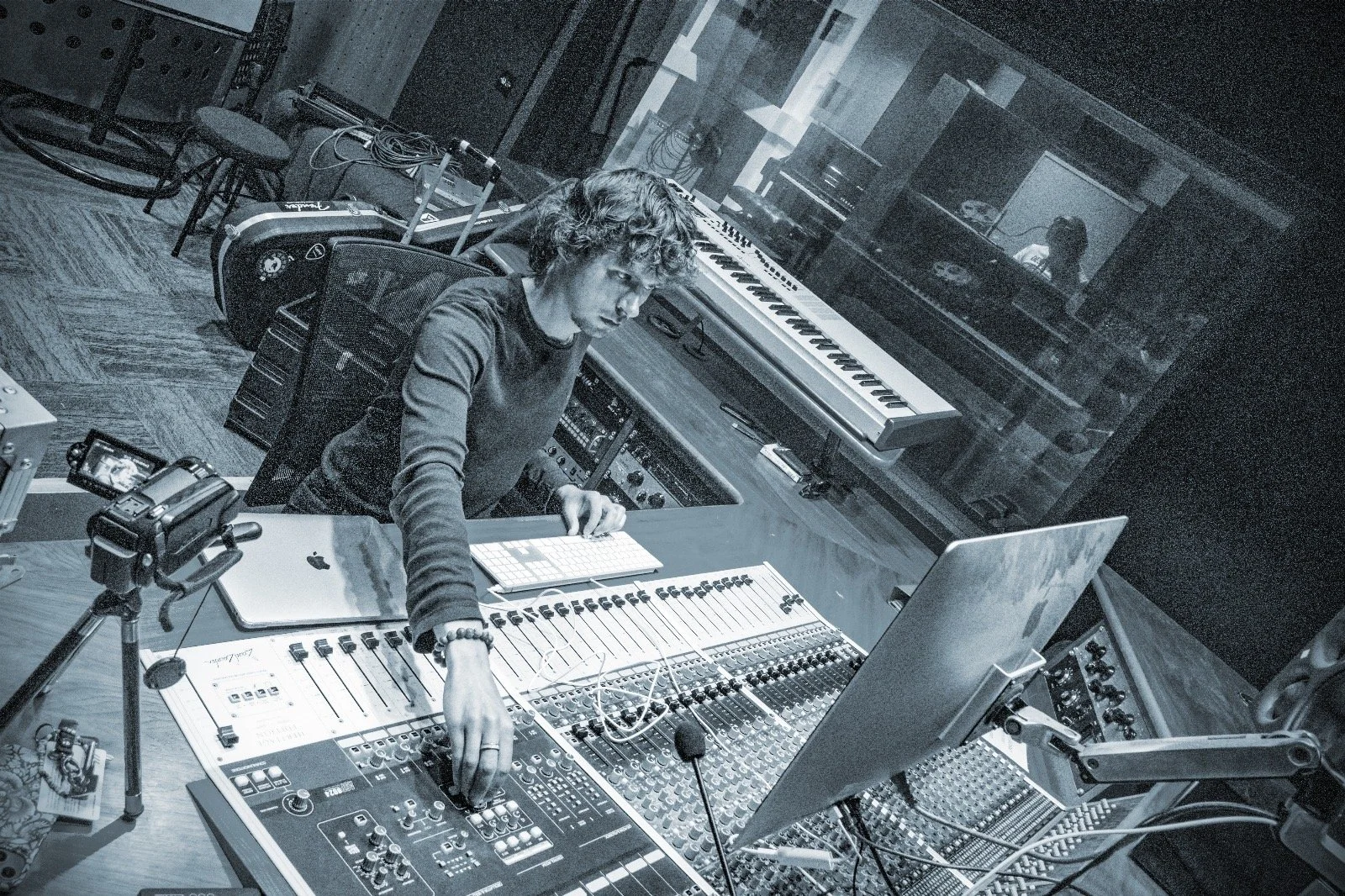
A whole new workflow:
Alas, here we go… Firstly, I must credit Eric ‘Mixerman’ Sarafin. In his book, ‘Zen and the Art of Mixing’, Mixerman explores an approach which he calls ‘aggressive mixing’. Which is more or less the workflow I follow now, although I tend to mix in a DAW as opposed to on an analogue mixing desk.
The first point to note is that aggressive mixing is not about making the mix sound aggressive, but rather about committing to decisions with speed and intention. The time you spend on a mix is bound to vary from project to project, as this is dependent on the scope, number of tracks, instruments, layers, as well as genre-specific practices. But taking away these variables, the time you spend on a mix is basically dependent upon:
The number of decisions you have to make
Your efficiency in making those decisions
Your efficiency in applying these decisions within the mix, effectively
The first of these three points is still a variable and not totally under your control; however, the latter two points certainly are, and with the practice and direction of a more intentional workflow, your efficiency, skill level and confidence are bound to come up roses.
The workflow in practice:
*Note: the timings are simply used for a rough reference, and points of focus vary between projects!
Stage 1 (First hour): This is a top-down mixing approach, meaning your aim at the start of the mix is to focus on broad processing adjustments on your master/group buses (drums, guitars, vocals, etc). With the project fully edited, aim to get a rough mix within the first 60-90 minutes. Don’t overthink — push faders, EQ boldly, and make sure everything speaks. Focus on clarity, stereo positioning, balance and identify your points of focus.
Stage 2 (Hours 2-6): Now it is time to delve into specifics. If something sticks out to you, target it & fix it. Re-level, compress, EQ, automate. Follow your producer instincts and move with intent. This is your time to get really creative. The beauty of adopting a top-down workflow, such as this, is that the mix should sound mostly good after stage 1, so get your hands dirty and make something exciting.
This is where the bulk of your mix is built. Another reason why this workflow is optimal is that after over an hour of mixing, your ears should be suitably sensitive to any changes (good or bad) within the mix. If you're spending somewhere in the realm of 5 sessions on your mix, you’re sensitivity to the mix can start to take on one of two evils: numbness, or over-sensitivity (usually both!). Don’t ask me how this works, but in my own experience and the experience of many other producers I have spoken with, you become overly sensitive to any micro-adjustment to a point that a subtle EQ boost in the high end of the toms suddenly changes how the whole mix sounds, and it can drive you crazy! Yet at the same time, you are numb to knowing exactly how your mix SHOULD sound as well as how it DOES sound! This is likely because you’ve pumped your ears with a plethora of sounds from micro-adjustments that, of course, ‘radically improve your mix’, all the while tricking your brain to not know what the hell it wants anymore!
In short, speed and intention are your friends and guides in mixing; obsession is not. However, if you do find you are still spending a long time on a mix, take rests and breaks from it, as well as listening on different sound systems.
Stage 3 (Hours 6-8): Now reference your stereo bus. What's poking out? What’s creating that low-mid frequency buildup? Identify problems on the stereo output, but trace them back and fix them in the mix! When finishing the mix, you can switch between approaches and do whatever you feel necessary to achieve the final mix sound.
Again, this is all about following your instinct as a producer, leaning into your creativity and acting with confidence! Do not be disheartened if this approach seems overwhelming as a developing mixing engineer; ultimately, consistent and intentional practice builds confidence - and eventually, there will be little need for you to question most of your mix decisions.
“Mixing is a game of confidence. If you’re confident, you’ll mix great. If you’re not, you won’t. Confidence in mixing is critical.”
- Mixerman
Remember... this is a practice like any other
The piece you can hear below is the first track I mixed almost entirely within one mix session. The only additional work I did was in the first hour of my next mixing session, where I worked on the notes which the artist gave me.
Thank you for reading, and happy mixing!
Will